EDU T127 Gallery Expo
-
![]()
Project Team
-
![]()
First Showcase
-
![]()
Rehearsal with Bill
-
![]()
Q&A with Bill
Reporting
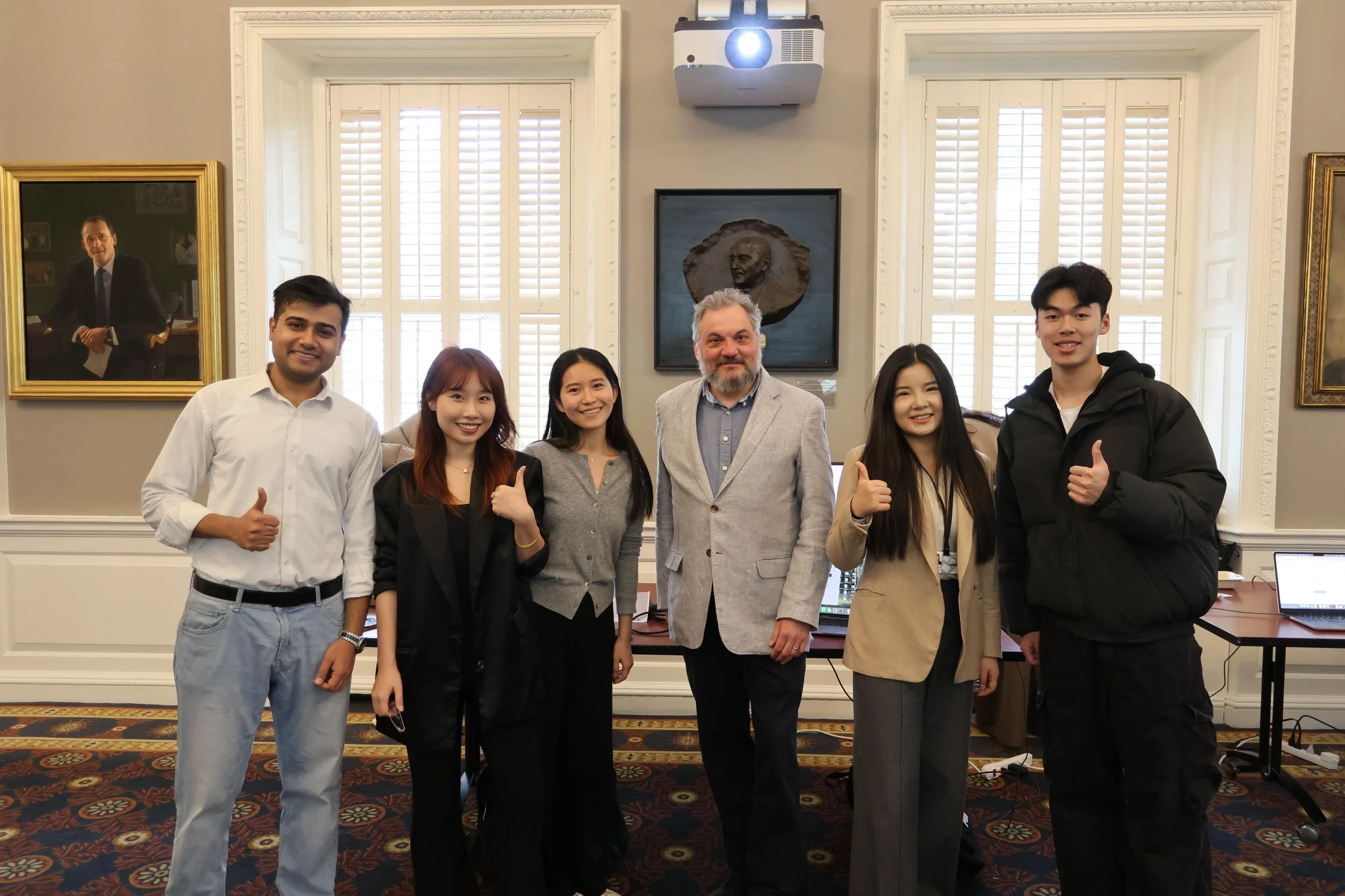
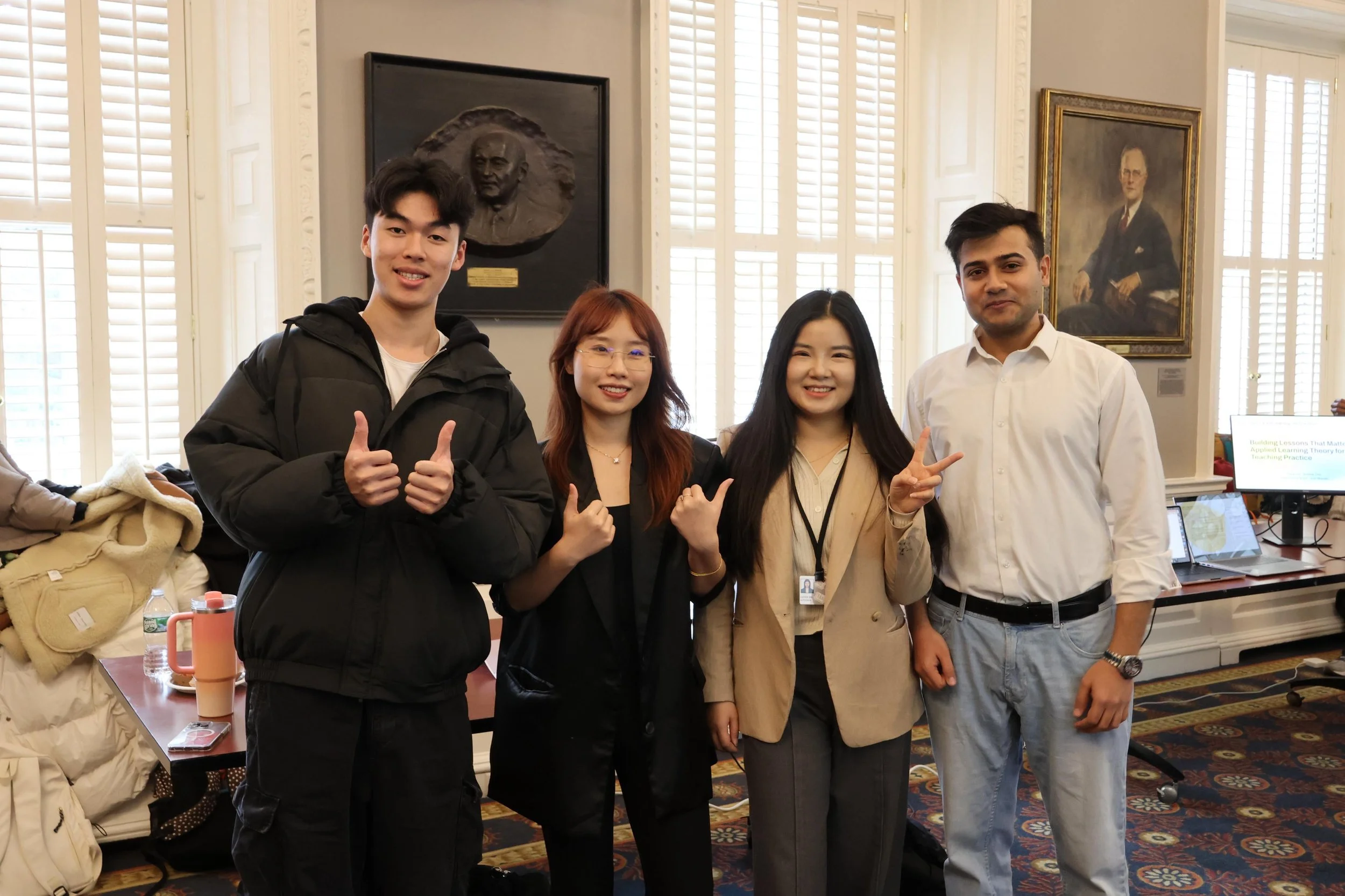
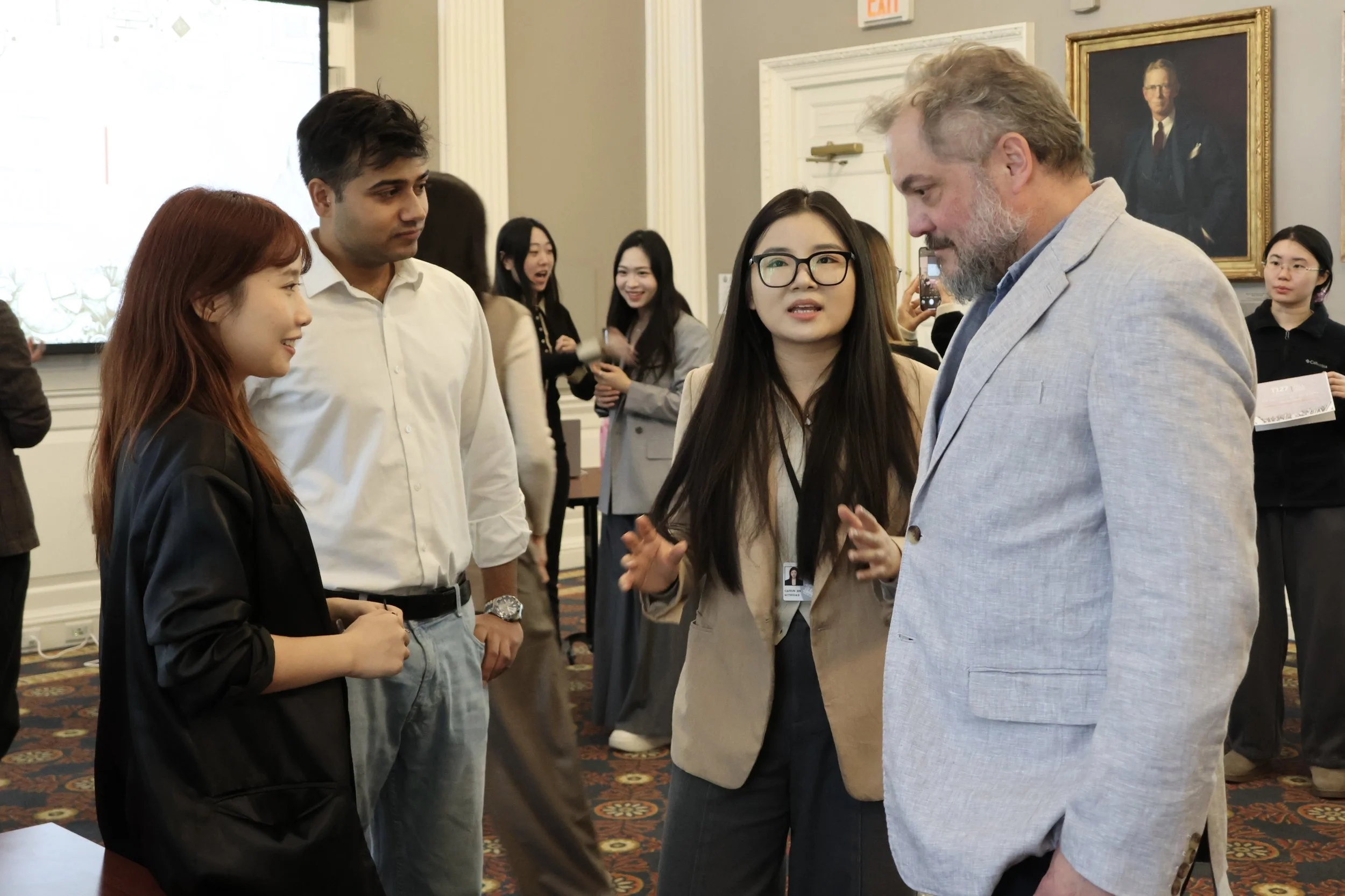
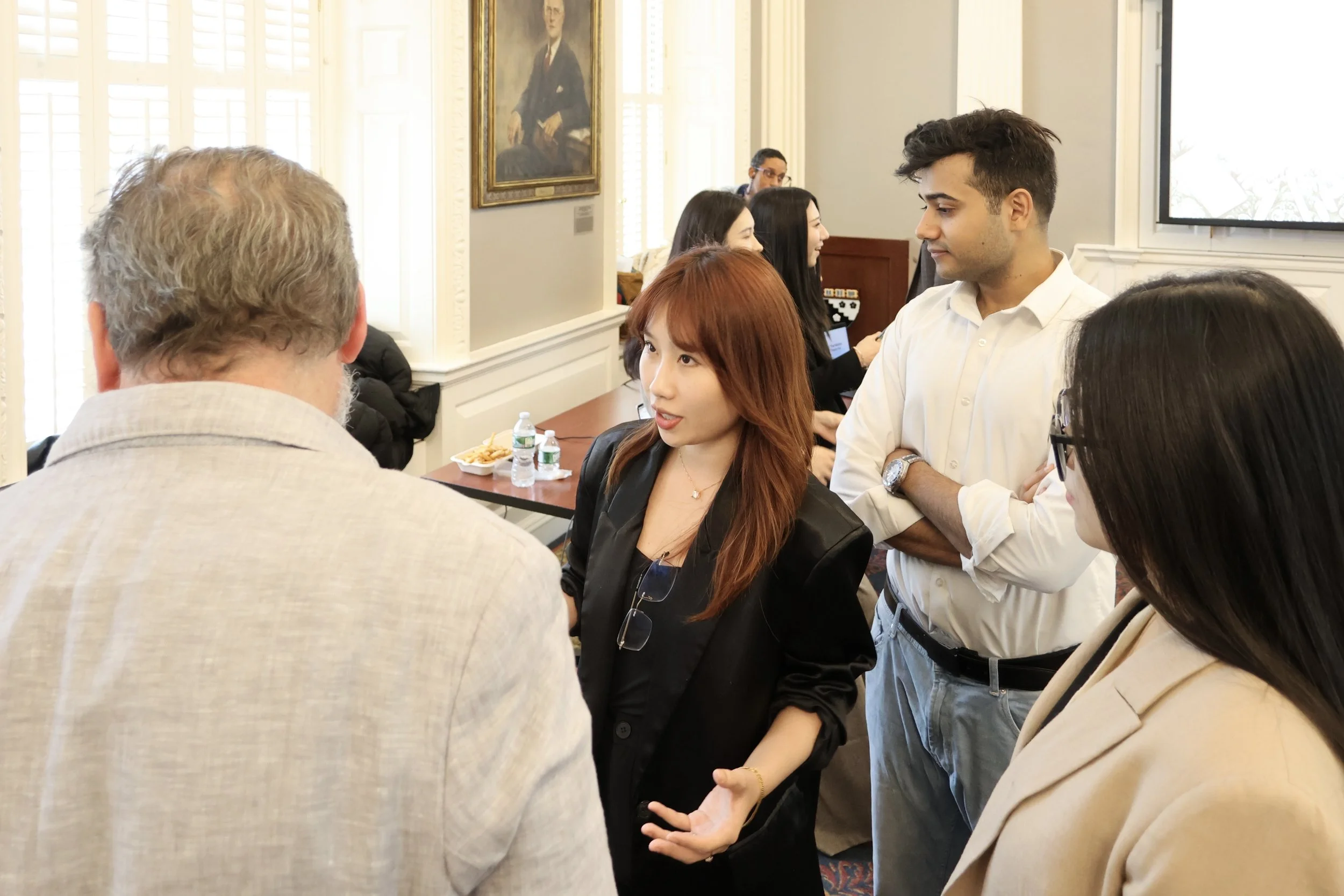
On November 20, 2025, our project team successfully completed a two-hour gallery expo showcasing our final product — a redesigned How People Learn course tailored for in-service teachers. In preparation for the event, we meticulously developed and repeatedly rehearsed a concise five-minute presentation to capture potential users’ attention within a limited time frame. We also designed and printed promotional flyers to provide additional information about our product.
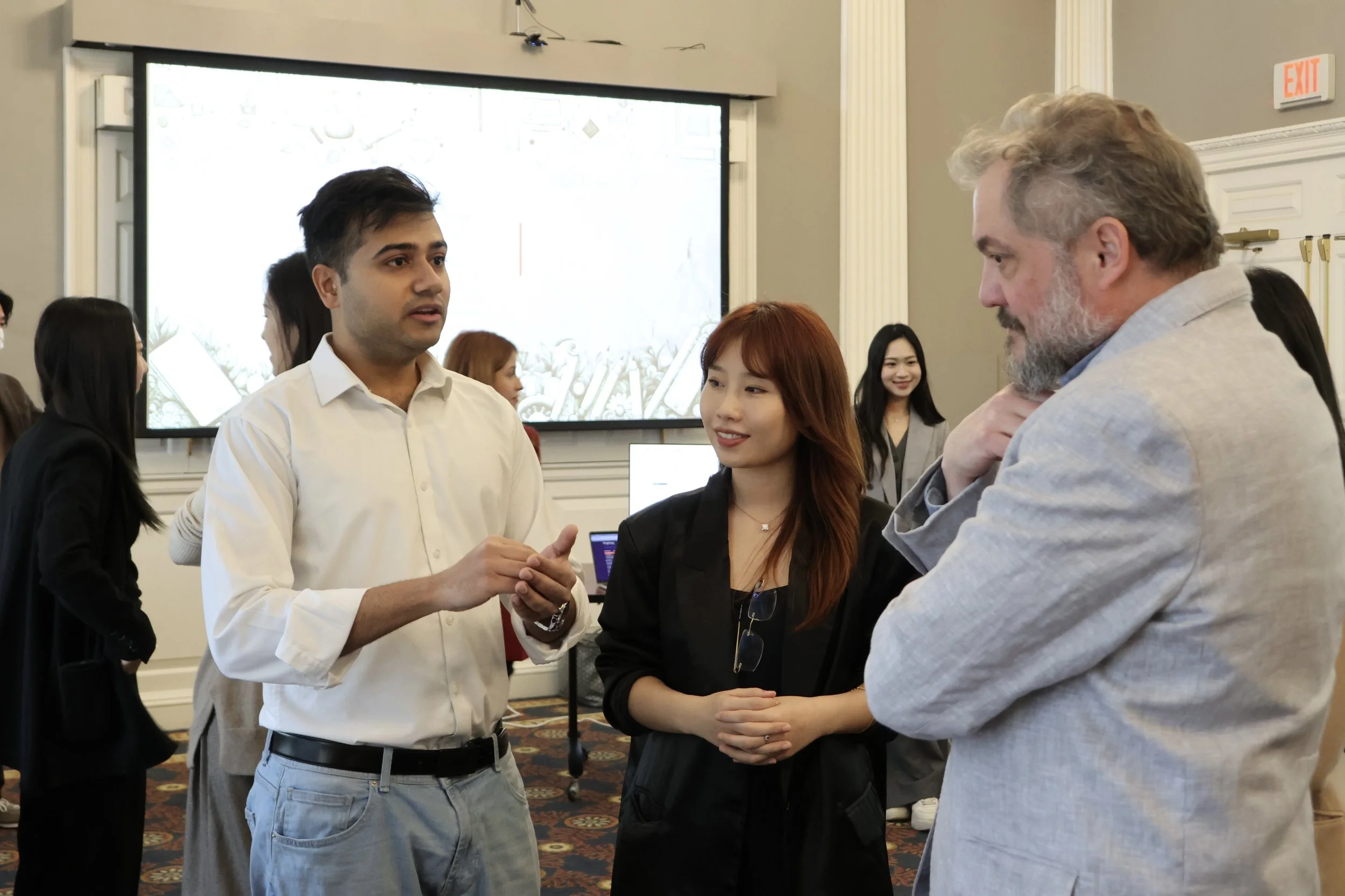
During the expo, many visitors expressed strong interest in the integration of artificial intelligence (AI) within our course design. At the same time, we received numerous thought-provoking questions about the role of AI in education. For instance, several participants asked, “What new competencies do in-service teachers need to develop to work effectively with AI?” Although our team addressed these questions effectively during the event, we recognized the importance of continuing to reflect on AI’s implications in education and refining our course design accordingly.
Responding
Reflecting on this experience, one critical question for us to consider is: What is the future of teacher–AI collaboration in education? From my perspective, although technology continues to advance rapidly, teachers should remain the primary agents of instruction, while AI serves as an assistant that supports and enhances their work.
There is no doubt that AI has become a powerful ally in the field of education. By automating routine tasks such as grading and attendance, AI allows teachers to dedicate more time to creative lesson planning and individualized student support. Intelligent tutoring systems can analyze learners’ performance data in real time, offering customized feedback and adaptive learning paths that respond to each student’s strengths and weaknesses. Moreover, AI-powered tools can enhance accessibility by providing instant translation, speech-to-text, and personalized learning materials for students with diverse needs. Rather than replacing teachers, AI serves as an assistant that amplifies their capacity to teach more effectively and inclusively, ultimately transforming classrooms into more dynamic, data-informed, and learner-centered environments.
Nevertheless, no matter how advanced AI becomes, it can never take the place of teachers. While AI can process data, deliver instant feedback, and personalize learning experiences, it lacks the human empathy, intuition, and moral guidance that are central to effective teaching. Teachers build meaningful relationships with students, understanding their emotions, motivations, and challenges—something technology cannot replicate. They also create safe, supportive classroom environments where students learn to collaborate, think critically, and develop social-emotional skills. Furthermore, teachers serve as role models who inspire curiosity, resilience, and ethical judgment—qualities that algorithms cannot teach. Thus, AI should be viewed as a supportive tool rather than a substitute, enhancing teachers’ work instead of replacing their irreplaceable human presence.
Looking ahead, the ideal model of teacher–AI collaboration envisions teachers remaining the primary drivers of instruction, with AI serving as a supportive assistant that enhances and streamlines their work. In this partnership, teachers continue to design learning goals, foster critical thinking, and guide students’ emotional and moral development, while AI handles data-driven tasks such as tracking progress, suggesting personalized resources, and identifying learning gaps. For example, AI tools can analyze assessment results to help teachers make informed instructional decisions, freeing them to focus on meaningful interactions with students. Such collaboration allows for a balance between human judgment and technological efficiency, ensuring that education remains both personalized and humane. Ultimately, the future of education depends not on replacing teachers with machines, but on empowering teachers to teach better through thoughtful integration of AI.
Relating
My current role as a literacy interventionist at a public elementary school in Boston has prompted me to think more deeply about the future of teacher–AI collaboration in education. In this role, I conduct literacy assessments and interventions with English learners to enhance their reading and writing outcomes. During these sessions, I experimented with integrating AI tools into my teaching, which significantly improved instructional efficiency and effectiveness. For instance, I used ChatGPT to generate short stories at varying levels of difficulty, aligned with the vocabulary we covered in class, for students to read and recite. I also utilized it to refine and iterate my lesson plans based on classroom observations and feedback from my mentor.
By automating parts of lesson preparation, AI relieved much of the pressure associated with designing instructional materials, allowing me to devote more time and energy to understanding my learners’ motivation and leveraging their social and cultural capital. In other words, collaborating with AI enabled me to become a more attentive “learner observer.” For example, when I noticed my student’s strong interest in birds, I downloaded several texts about dodo birds and asked ChatGPT to adapt them into a 300-word reading passage appropriate for Grade 4 students. Through this material, I discovered that my learner read fluently—a clear strength—but struggled to summarize the text’s main ideas, revealing an area for growth. Based on this observation, I decided to focus future sessions more on reading comprehension strategies, such as skimming and scanning, rather than fluency alone. While AI handled much of the “reckoning” work, I, as the teacher, could concentrate on the “judgment” and decision-making that lie at the heart of effective instruction.
Reasoning
The future of teacher–AI collaboration in education, according to Intelligence Augmentation: Upskilling Humans to Complement AI (Dede, Etemadi, & Forshaw, 2021), lies in a model of intelligence augmentation (IA)—a synergistic partnership where humans and AI complement rather than replace each other. This partnership envisions teachers and AI systems working together to maximize the strengths of both human judgment and machine computation.
In this vision, AI specializes in “reckoning”—tasks involving calculation, data analysis, and predictive modelling. For instance, AI can efficiently handle grading, pattern recognition in student performance, or data-driven recommendations for personalized learning. Teachers, on the other hand, specialize in “judgment,” which involves ethical reasoning, empathy, contextual understanding, and decision-making under uncertainty. By offloading mechanical and analytical work to AI, educators can devote more attention to moral reasoning, creativity, and the social-emotional dimensions of learning that machines cannot replicate.
Importantly, the document emphasizes that AI cannot emulate human-level judgment because it lacks three essential forms of knowing: embodied experiential knowing (EEK), collective cultural knowing (CCK), and personal performative knowing (PPK). These refer respectively to emotional intuition and sensory experience, cultural understanding and empathy, and moral identity and ethical responsibility. Since teaching fundamentally relies on these dimensions—understanding students’ emotions, interpreting cultural nuances, and making ethical decisions—AI will serve as a complement rather than a substitute for educators.
Furthermore, teacher preparation and professional development must evolve to support this human–AI partnership. The focus should shift from purely technical training toward cultivating higher-order judgment skills such as open-mindedness, ethical reasoning, and cultural sensitivity. Learning experiences that develop these abilities—like immersive simulations, values-based reflection, and cross-cultural communication practice—will prepare teachers to interpret AI outputs critically and make contextually appropriate pedagogical decisions.
Ultimately, the future classroom will be characterized by collaboration rather than competition between teachers and AI. AI will act as a “reckoning assistant,” managing data, adapting instruction, and providing analytical insights, while teachers will remain at the centre as moral and relational leaders guiding learning through empathy, ethics, and wisdom. This human–machine partnership embodies the idea that education’s future is not about replacing teachers with technology, but about empowering teachers through it—achieving outcomes that neither could accomplish alone.
Reconstructing
The reconstruction of future classrooms will be defined by a synergistic partnership between teachers and AI, where technology enhances rather than replaces human instruction. In this model, AI functions as a “reckoning assistant,” efficiently managing analytical tasks such as data tracking, adaptive assessment, and personalized content generation, while teachers focus on “judgment” — the moral, emotional, and relational dimensions of teaching. This collaboration allows educators to devote more time to understanding students’ motivations, fostering critical thinking, and designing culturally responsive learning experiences. Classrooms will become dynamic ecosystems where data-informed insights meet human empathy, ensuring instruction is both personalized and humane. As teachers remain the central agents of learning, the integration of AI will empower them to teach with greater creativity, inclusivity, and ethical awareness—ultimately reconstructing education into a space of co-intelligence between humans and machines.
“A human-and-AI team’s overall performance is greater than their individual capacity.”
— Dede, C., Etemadi, A., & Forshaw, T.