Weekly Blog Post #10
2 Ideas for Final Project II
Idea 1: Ancient Church Hierarchy Chess
Product Overview
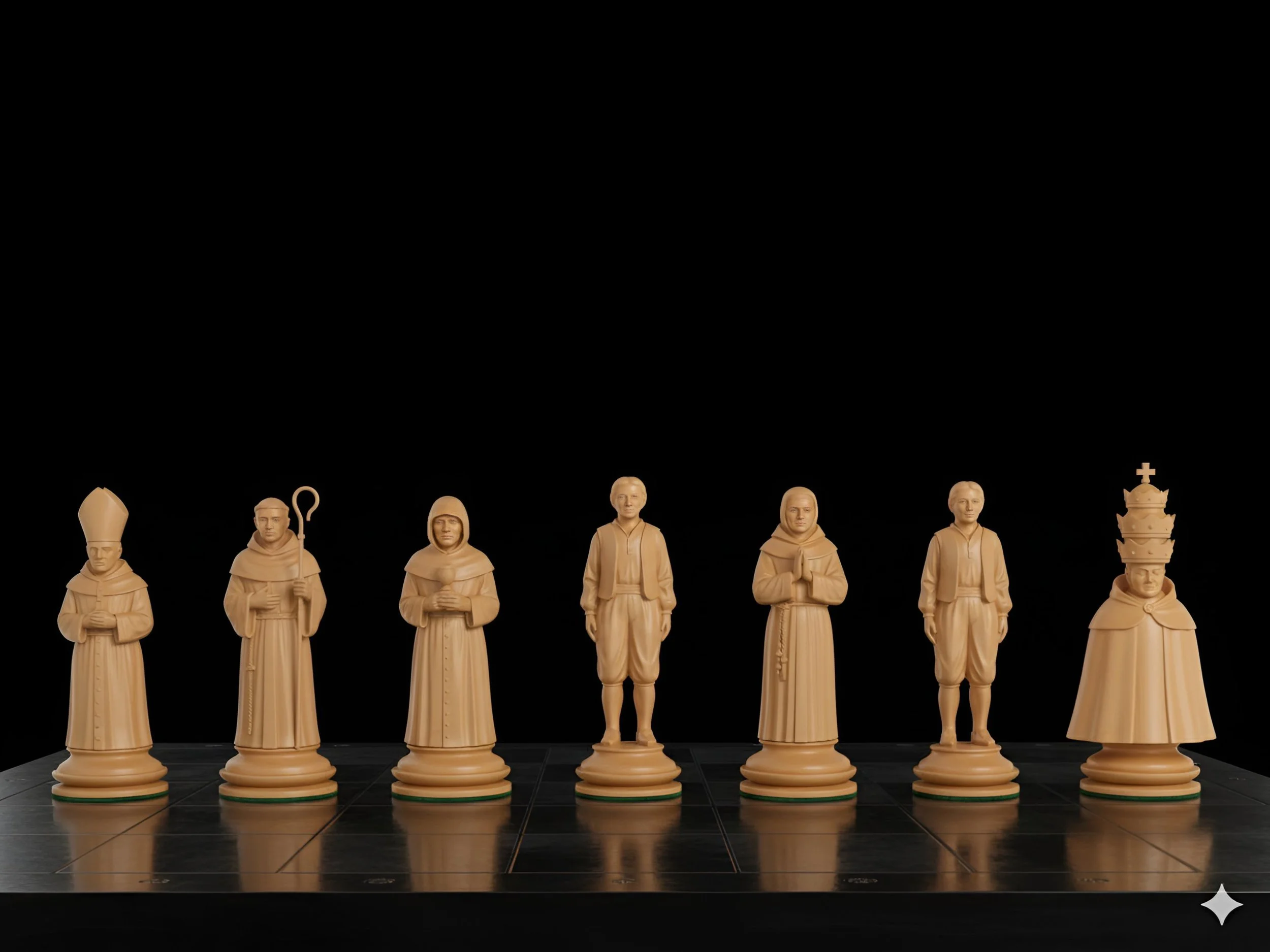
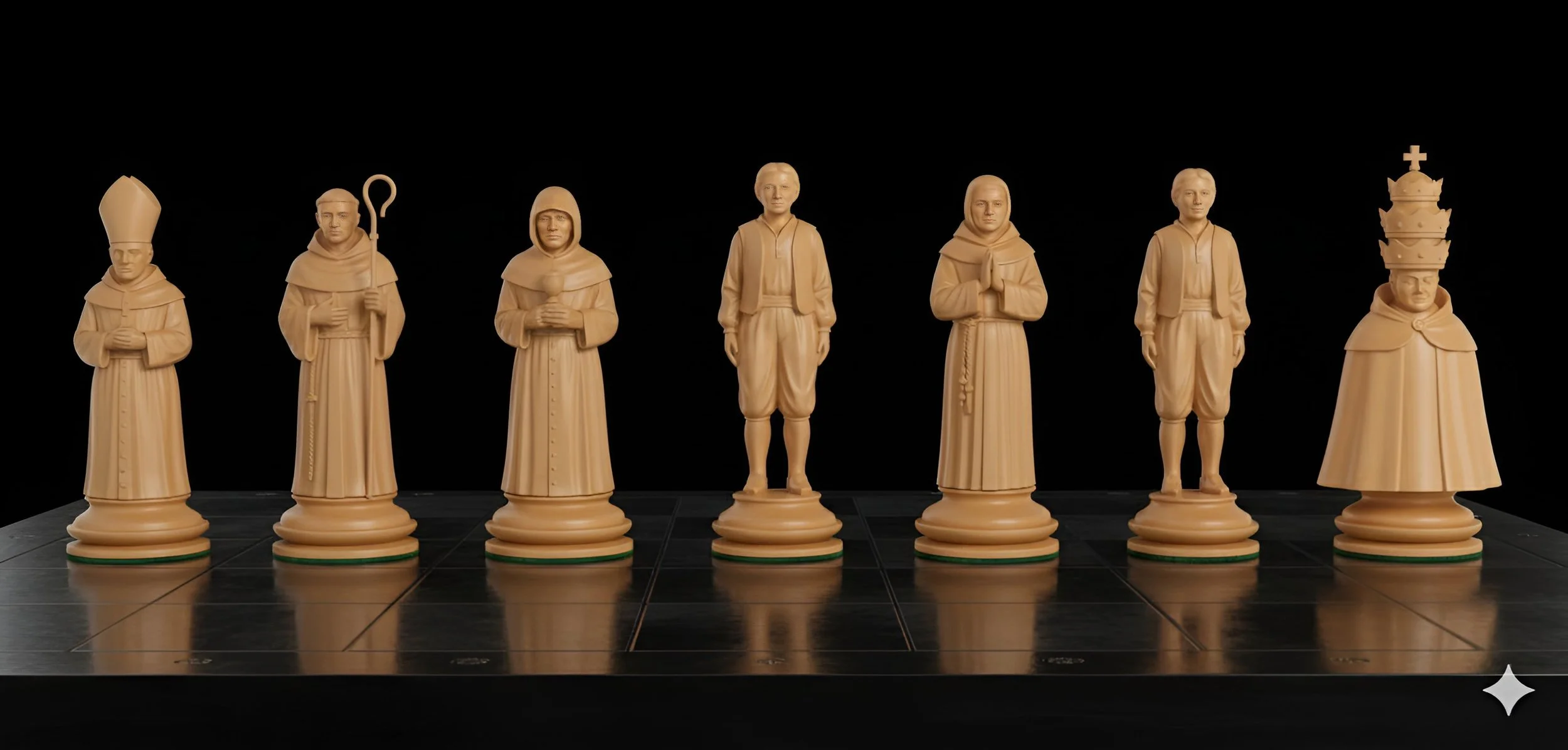
Ancient Church Hierarchy Chess is an educational board game inspired by Chinese Chess (Xiangqi), reimagined to represent the power structure of the ancient British Church. The game features seven distinct pieces—Pope, Archbishop, Bishop, Abbot, Priest, Monk, and Layperson—each corresponding to traditional Xiangqi roles such as General, Advisor, Elephant, Horse, Chariot, Cannon, and Soldier. By merging cultural gaming mechanics with historical learning, this product transforms abstract religious hierarchy into a vivid, strategic, and interactive learning experience.
Design Concept and Gameplay
The game retains the rules, board layout, and movement patterns of traditional Chinese Chess to ensure familiarity and intuitive engagement. Each role mirrors the hierarchical order and symbolic function of its real historical counterpart. For instance, the Pope, like the General, serves as the central figure whose capture ends the game; the Archbishops and Bishops protect and advise him within restricted spaces, symbolizing ecclesiastical order; Abbots and Priests move with agility to connect and defend; Monks and Laypersons, like Cannons and Soldiers, represent grassroots mobility and sacrifice. Through this mapping, every move embodies both strategy and theology.
Educational Value
This design goes beyond entertainment—it serves as a pedagogical tool for exploring the ancient British Church hierarchy in an experiential way. Players organically learn about the roles and relationships within the medieval Church through gameplay metaphors: authority, obedience, protection, and service. The game encourages historical curiosity, conceptual understanding, and cultural comparison, allowing learners to see how religion and governance intertwined in medieval Britain. Additionally, the parallels between Eastern and Western hierarchies foster cross-cultural thinking and historical empathy.
Conclusion
Ancient Church Hierarchy Chess bridges education, history, and cultural design through an innovative reinterpretation of a classic board game. By engaging learners in strategic play that mirrors ecclesiastical order, it offers both intellectual depth and cultural resonance. The game ultimately aims to make history tangible—transforming abstract hierarchies into dynamic interactions where every move tells a story of faith, power, and learning.
Idea 2: Letter Combination Magnet Toolkit
Product Overview
The Letter Combination Magnet Toolkit is an innovative learning set designed to enhance English phonics learning through hands-on interaction. Unlike traditional magnetic letter sets that only provide single vowels or consonants, this toolkit includes complete combinations of vowel and consonant clusters found in the English language. Learners can explore and manipulate these combinations—such as vowel groups (aa, ae, ai, ea, oi) and consonant clusters (tr, sc, bl, cr, sh, th)—to build phonetic awareness and strengthen word formation skills.
Design Concept
The toolkit is carefully designed based on the principle of pattern recognition in phonics learning. Each magnetic piece represents a meaningful sound unit rather than an isolated letter, allowing learners to directly engage with phoneme–grapheme correspondences. The vowel combinations are color-coded for easy distinction, while consonant clusters are shaped to emphasize their blended sound patterns. The magnets can be arranged freely on metallic boards, enabling learners to experiment with constructing syllables, decoding new words, and observing pronunciation changes when combining different sounds.
Educational Value in Phonics Learning
This toolkit transforms abstract phonics rules into tangible and playful learning experiences. By physically combining letter units, learners develop a more intuitive understanding of sound blending, segmentation, and spelling patterns. It supports both early literacy learners who are beginning to decode sounds and EFL students who need to visualize English sound patterns. The multisensory design—seeing, touching, and sounding out the combinations—reinforces memory retention and promotes phonological awareness, a key foundation for fluent reading and accurate pronunciation.
Conclusion
The Letter Combination Magnet Toolkit bridges the gap between phonics theory and practice by offering a dynamic, interactive way to explore English sound structures. Through creative play and guided discovery, it empowers learners to recognize patterns, build words, and internalize pronunciation rules. Ultimately, the toolkit not only supports literacy development but also inspires curiosity and confidence in learning English as a sound-rich, pattern-based language.